

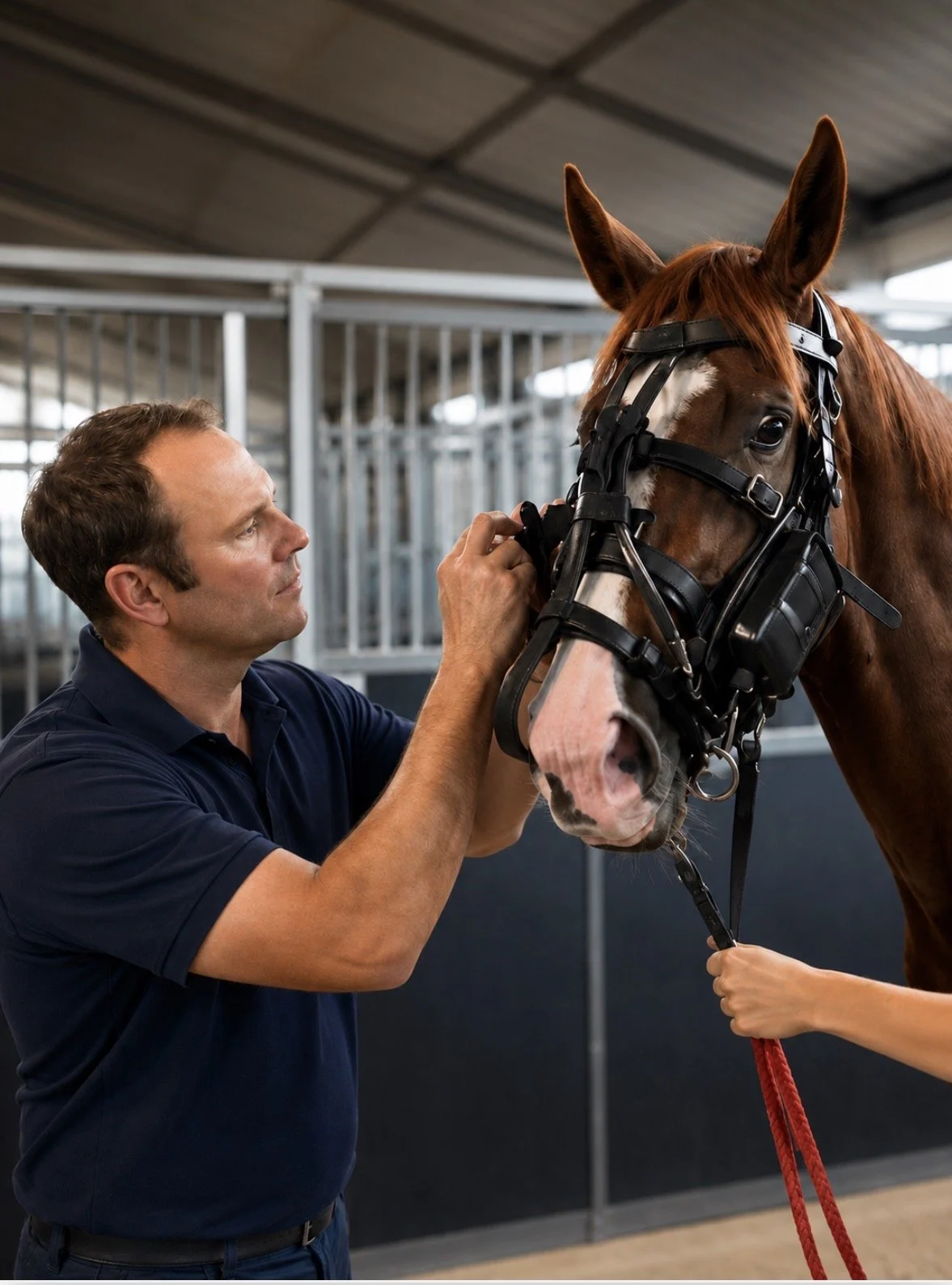
Image 1: Dr Ross Alexander putting a Dynamic Scope onto a racehorse for morning trackwork.
Endoscopic Examinations
They allow vets to assess the horse’s airway at rest and during exercise.
The use of a fibre-optic scope allows visualisation of the horse’s upper respiratory tract, including the pharynx, larynx and trachea. Endoscopic Examination also known as ‘scoping’ can be done routinely or may be indicated after coughing, nasal discharge or respiratory noise detected during exercise.
On examination, the arytenoid cartilages of the larynx are evaluated for symmetry and movement. A grading system is used to assess arytenoid function during normal respiration, after swallowing and when required following nasal occlusion. Any evidence of pharyngitis, or pharyngeal lymphoid hyperplasia is noted and graded. The epiglottis is also evaluated for any ulceration or other abnormalities. The trachea is then examined for signs of infection or haemorrhage. The findings of the endoscopic examination are discussed with the trainer, enabling an appropriate treatment or management plan to be formulated.
Dynamic Scoping
Whilst most endoscopic examination are done in horses at rest, a dynamic endoscopic examination can be performed to assess the upper airway during exercise. Recent technological advances have enabled this examination to be carried out during morning trackwork at the racecourse. A specially designed video endoscope is fitted over the bridle, which allows the horse to work under normal training conditions and with its own tack in place. The video footage is then downloaded for frame-by-frame analysis.
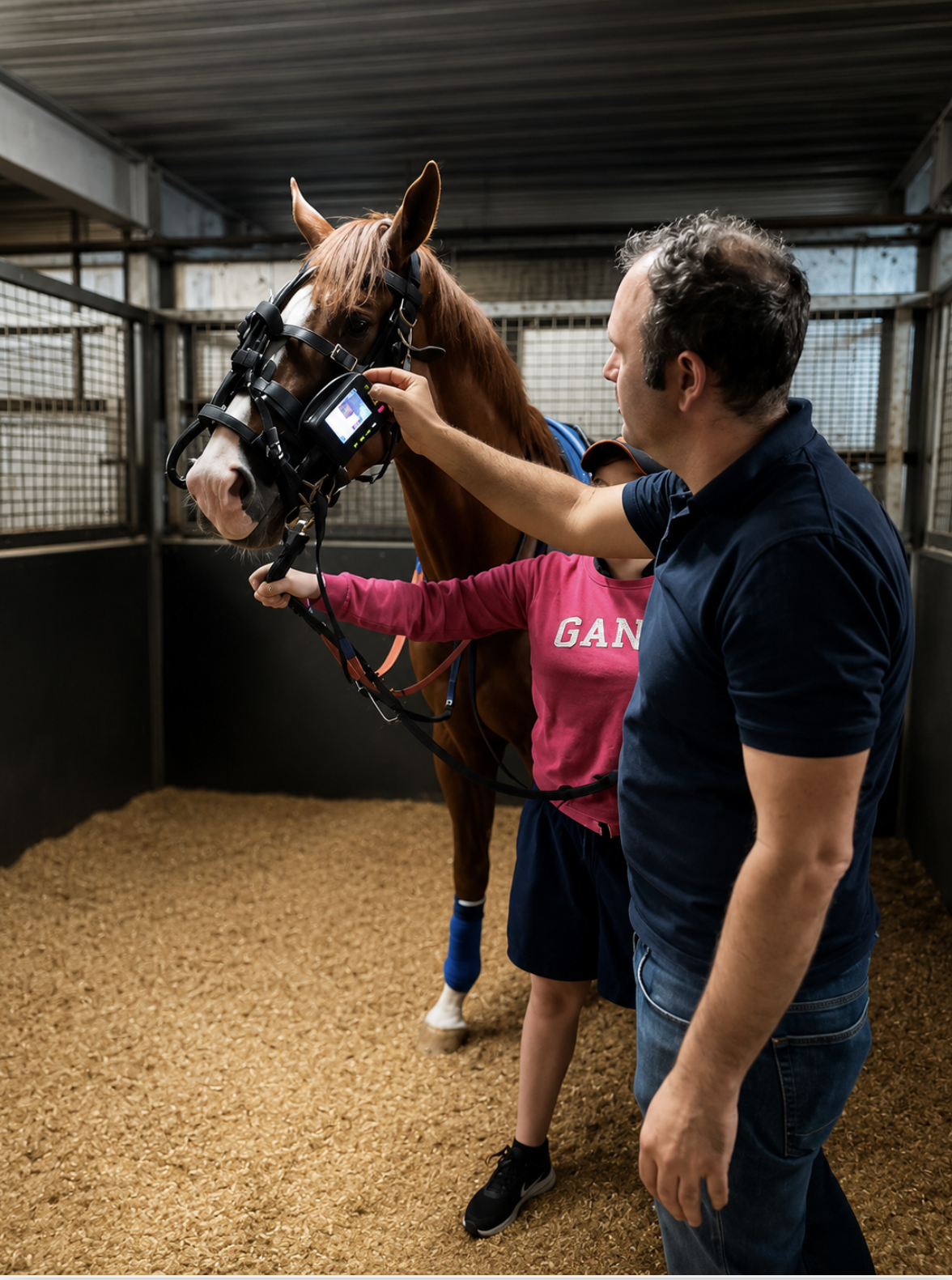
Why would a dynamic scope be recommended?
Dynamic respiratory endoscopy may be recommended in horses which make an abnormal respiratory noise during work, have a history of poor performance, or to further evaluate the arytenoid movements of horses which show reduced laryngeal function at rest.
Multiple abnormalities can be detected in the upper airway during a dynamic scope, namely: collapse of the arytenoid cartilages, deviation of the aryepiglottic folds, collapse of the vocal cords, dorsal displacement of the soft palate and pharyngeal collapse. Such abnormalities can limit airflow, which leads to early fatigue and poor performance.
Disclaimer: The information provided in this blog is general in nature and intended for educational purposes only. It does not constitute veterinary advice and should not be used as a substitute for individual examination and diagnosis by a qualified veterinarian. Every horse is different, and treatment recommendations can vary based on individual circumstances. If you have concerns about your horse's health, please contact Centennial Park Veterinary Practice or your local veterinarian directly. While we make every effort to ensure the accuracy of the information provided, Centennial Park Veterinary Practice accepts no liability for any loss, injury, or damage arising from reliance on this content.