

Our Inspection and Selection Services
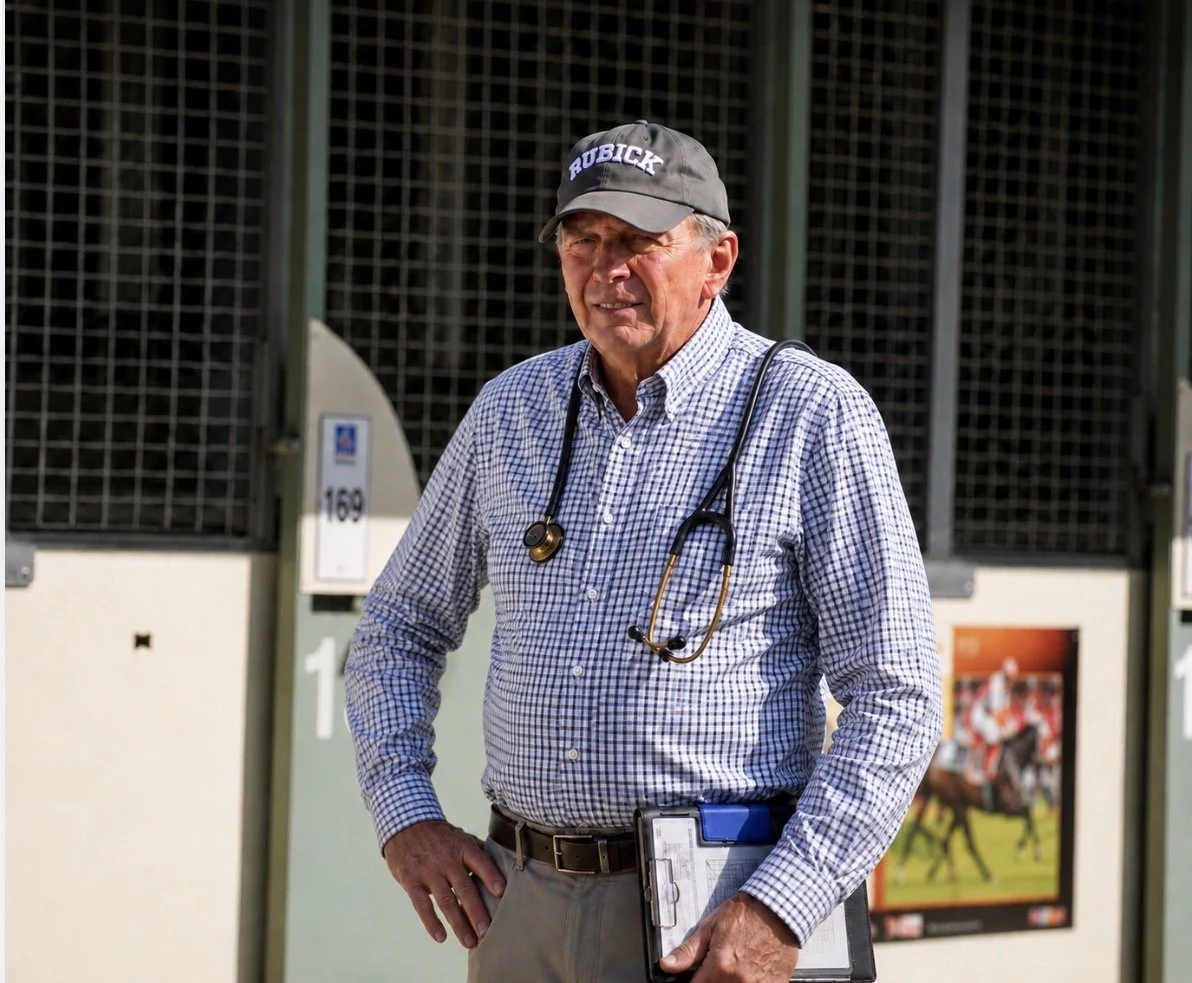
Dr Tim Roberts has over 50-years experience inspecting and selecting yearlings. For those wanting to book in our pre-purchase, inspection and selection service, please fill in the contact form below.
The Process
Stage 1: Understanding the Client’s Requirements
The process entails our veterinarians producing a short list of select yearlings according to the individual client’s requirements.
In these selections a client may have certain preferences as to sire, sex or other criteria such as dollar value. Others may simply request a list of athletic individuals that they could buy with the knowledge they have passed our disciplined examination process.
Physical attributes include but are not limited to precociousness, scope, pedigree, performance of relations, and suitability to the training environment. The history and management of the individual during gestation and development from foal to yearling is also taken into consideration.
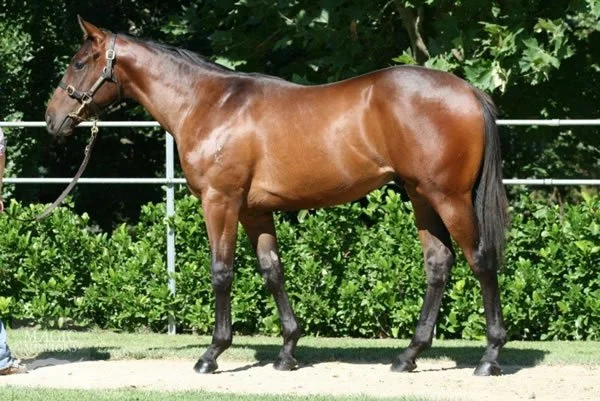
Unencumbered (AUS) 2011
Lot 436 2013 Magic Millions Gold Coast Yearling Sales
Vendor: Newhaven Park
Horse passed in, Dr Tim purchased and sold to Björn Baker.
Breeding: Testa Rossa x Blizzardly (More Than Ready (USA))
Stage 2: Physical Examination
Yearlings are first examined with regard to their overall appearance. After the initial appraisal the yearling is paraded where an assessment of gait and physical presence is made. Horses with angular limb anomalies are evaluated, certain limb anomalies are acceptable, other combinations of limb anomalies are more susceptible to breakdown. These issues are recorded and reported back to the client concerned.
At this examination symmetry, size, development, quality and temperament are all evaluated and recorded. This report is then shown to the client and once a yearling passes this initial examination the next phase is undertaken.
Stage 3: Repository Review (X-Rays & Endoscopes)
All yearlings at major sales and most at minor sales in Australia today have radiographic surveys (x-rays) submitted to the Repository; an area for veterinarians to view directly or online records submitted by the vendors with regard to the yearlings they are selling. These records include surgical reports, radiographs and video endoscopes of the upper respiratory tract.
Our veterinarians review all the information submitted in the repository with regard to the yearling of interest, a report is then prepared for the client detailing any issues that may have an impact on the yearling’s suitability for purchase.
Radiographs are evaluated and put in the low, low to medium, medium, medium to high or high risk category. Endoscopy is evaluated on a grading system with regard to laryngeal function Grades 1, 2, 3A, 3B, 4 and 5. Also included is a notation of the upper airways physical attributes, function, disease or other anomalies that may impact the yearling’s suitability for purchase. Surgical and other reports submitted are reviewed and reported on.
Stage 4: Clinical Inspection
Once the individual yearling has passed the previous stages, a final clinical inspection is undertaken. Here the yearling is physically examined with its heart auscultated, eyes checked (ophthalmoscope and threat reflex) external genitalia examined (in colts presence of both testicles or fillies conformation of the vulva), the feet are examined as in the mechanical function of distal fore limbs.
As you now know the pre-purchase examination of a yearling involves a lot of work for our veterinarians, however we believe this is a very important service as our clients can purchase their yearlings knowing they have purchased a healthy individual that is more likely to race sound and successfully.
We strongly encourage our clients to use this service to significantly improve their chances of a successful yearling purchase. We would like our clients to be aware that a report on the information stored in the repository alone is not considered a veterinary examination. The physical inspection of the yearling is critical if you want your yearling to have a long and hopefully successful racing career.
We wish you and all our valued clients great success with your 2026-27 yearling purchases. If you have any questions regarding this brief summary of what a yearling inspection involves or you require our Inspection and Selection Service at future yearling sales, please use the contact form below.
Enquire Today!
Disclaimer: The information provided in this blog is general in nature and intended for educational purposes only. It does not constitute veterinary advice and should not be used as a substitute for individual examination and diagnosis by a qualified veterinarian. Every horse is different, and treatment recommendations can vary based on individual circumstances. If you have concerns about your horse's health, please contact Centennial Park Veterinary Practice or your local veterinarian directly. While we make every effort to ensure the accuracy of the information provided, Centennial Park Veterinary Practice accepts no liability for any loss, injury, or damage arising from reliance on this content.